Airbourne
WWII night-drop VR · Quest 2 · 2026
D-Day, 1 a.m. Choose your route, choose when to jump, then find your way in the dark with a paper map and a compass, against Germans who hear you, search for you and flank you.
Role: solo designer: pitch, pillars, the July prototype (hands-on Blueprint), design decisions, playtests. Built with: UE 5.8 Blueprint, Epic XRFramework/OpenXR, Claude Code for the October build-out. Timeline: prototype July 2026; build-out Oct 9–12, 2026. Status: vertical-slice loop playable on Quest 2.
| By the numbers
44 → 62
Frames per second in the briefing tent on Quest 2 after the performance pass
5
Alert stages per enemy: Unaware, Suspicious, Searching, Combat, zone Alarm
45 → 62
Median fps in the drop zone
0
HUD elements. The map, compass, watch and cricket clicker are objects.
| The design house
1. You choose the jump
Jump early and you’re safe but far from the objective; jump late and you’re close, but through searchlights and flak.
2. The world is tactile
No HUD. If information could be a UI element, it’s an object first.
3. Any way you want
Enemies are systems with alert stages, not triggers. No objective requires one approach. And 72 fps is never traded for spectacle.
| Inside the design
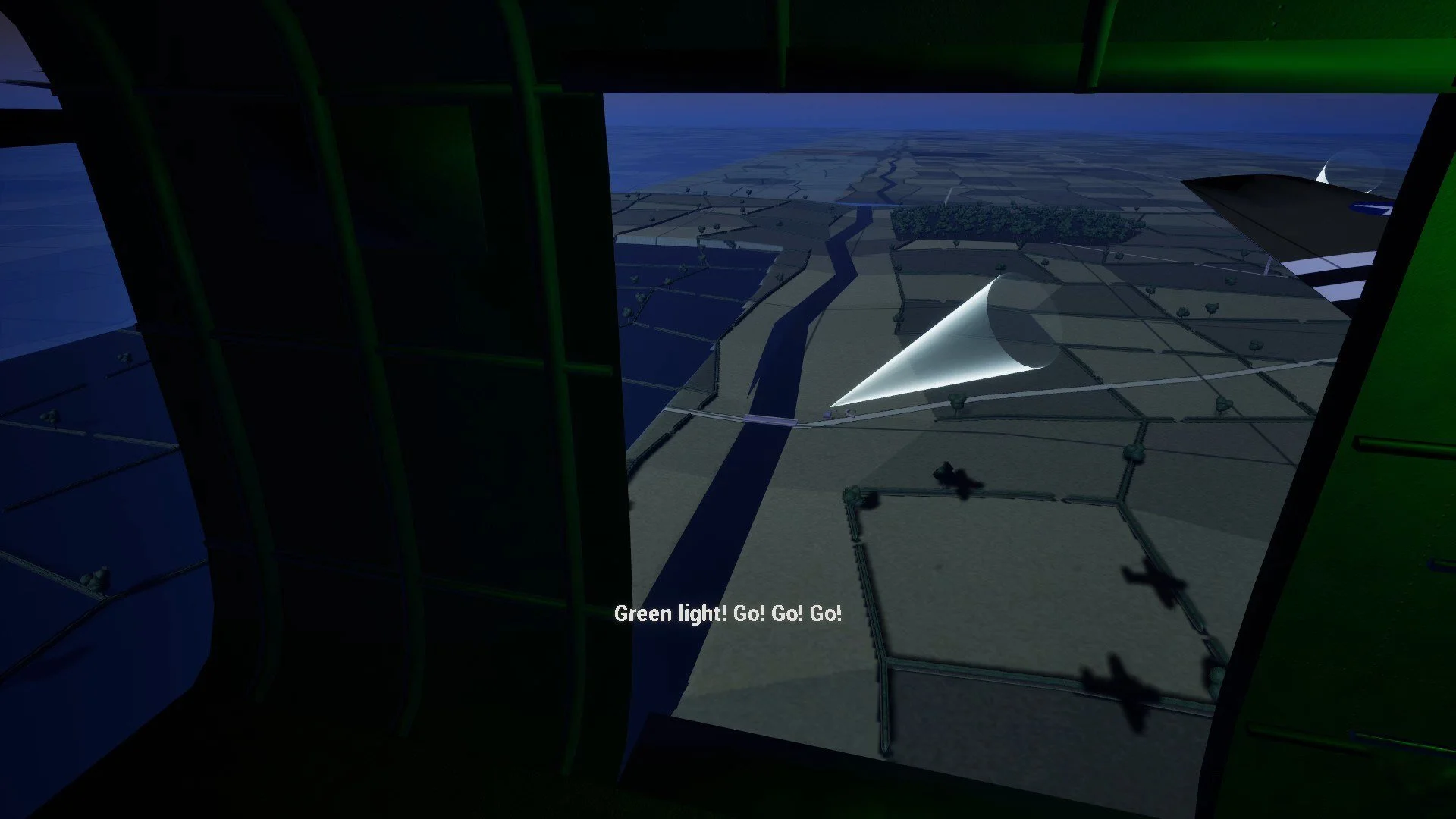
The jump is the first decision
The red light comes on, the stick shuffles to the door, and you pick the moment. Where you land decides how far you walk, what you can see, and who hears you first. Everything after that is navigation by map and compass in the dark.
NO HUD · DIEGETIC FEEDBACK
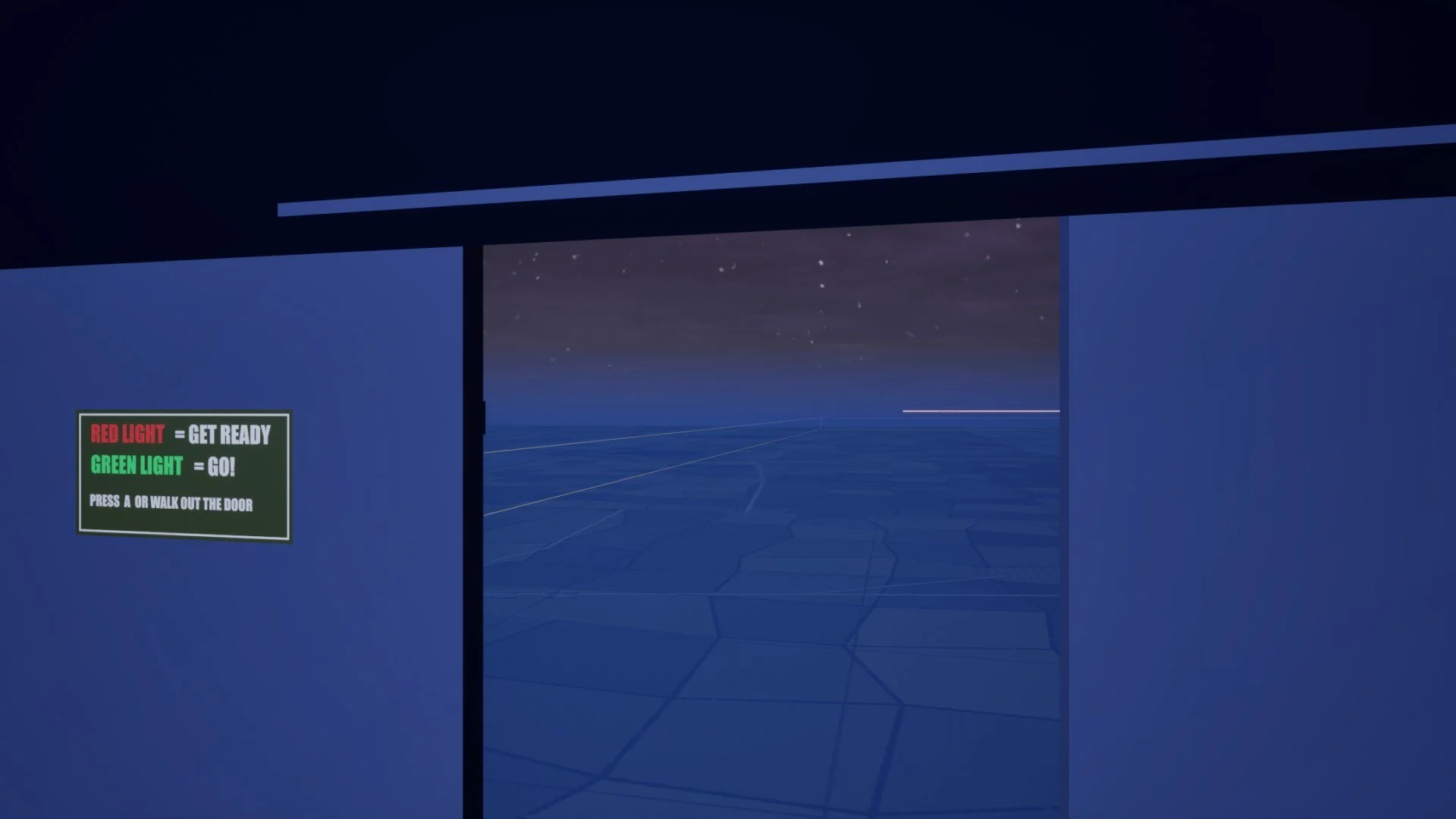
Playtest: “a miss”, fixed in-world
The first test with VR newcomers was, in my words, a miss. Combat worked, but players didn’t know when to jump and couldn’t use the map. So every fix taught in the world: walk-out-the-door jumping, a jumpmaster’s voice, a red/green door placard, a map annotated “JUMP HERE on the GREEN light”, and a practice door on the range.
PLAYTEST → CHANGE
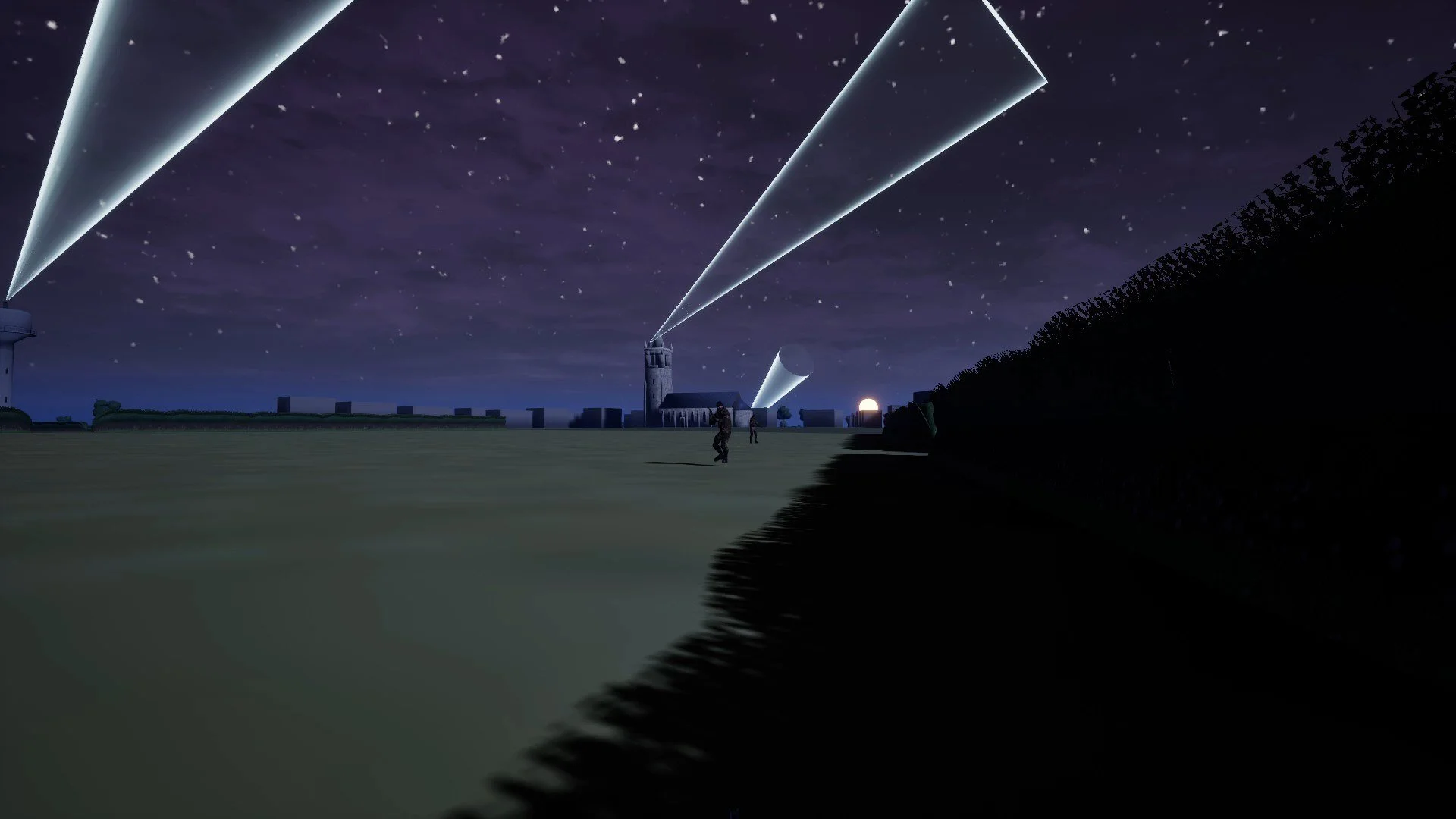
Combat AI: alert stages, not triggers
A per-enemy awareness meter drives five stages, with diegetic feedback: shouted call-outs (“Wer da?”), flashlights and music stings, never a HUD icon. A gunshot sends enemies searching toward the sound but never starts a fight on its own, so stealth survives a mistake.
COMBAT AI · STEALTH
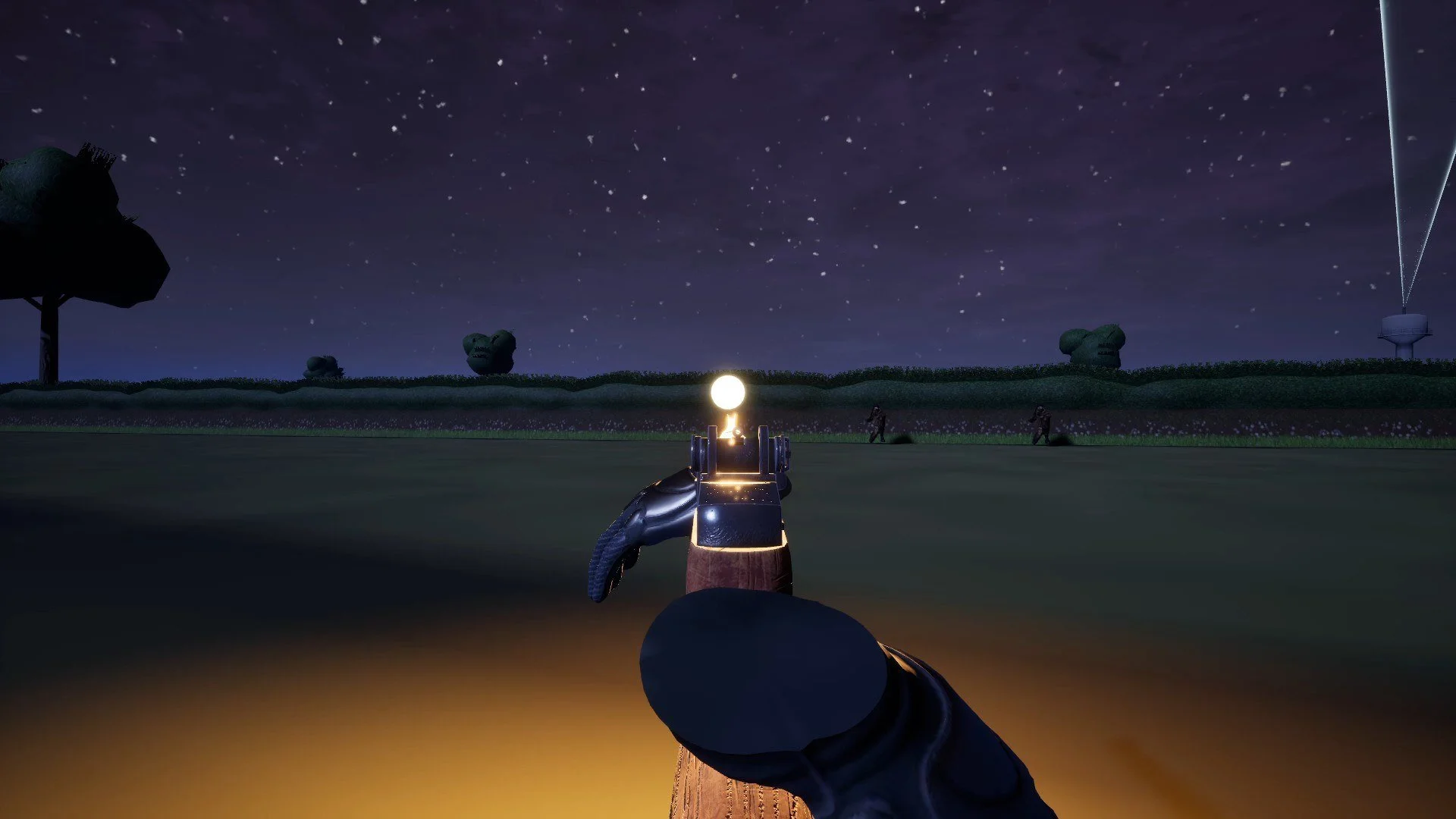
Fair flanking, dodgeable fire
One squad director deals roles: the MG is the base of fire, plus up to two flankers, and every flank is shouted (“Flankieren! Links!”). The call-out is the counterplay. Enemy shots resolve instantly for performance, but damage lands when the slow, readable tracer arrives, so incoming fire is dodgeable in VR.
COMBAT AI · QUEST 2 BUDGETS: 4 FIRING, 12 ANIMATED, 30 ALIVE